Robert the Doll has been called a lot of things: haunted, possessed, cursed, the real-life inspiration for Chucky, the most paranormally active object in the United States. He’s also, by most accounts, a faded 40-inch sailor doll sitting behind glass in a small museum in Key West, Florida.
Both descriptions are true. That’s what makes him interesting.
For over a century, Robert has been at the center of one of the longest-running paranormal cases in American history. People who mock him reportedly suffer flat tires, broken bones, sudden illness, lost jobs, and divorces. The museum that houses him receives hundreds of apology letters every year from visitors who left without asking permission. Don Mancini, the creator of the Child’s Play franchise, has cited Robert as the direct inspiration for Chucky.
We’re going to dig into the whole story. Where the legend ends, where the documented history begins, and what to actually expect if you decide to visit him.
What Is Robert the Doll?
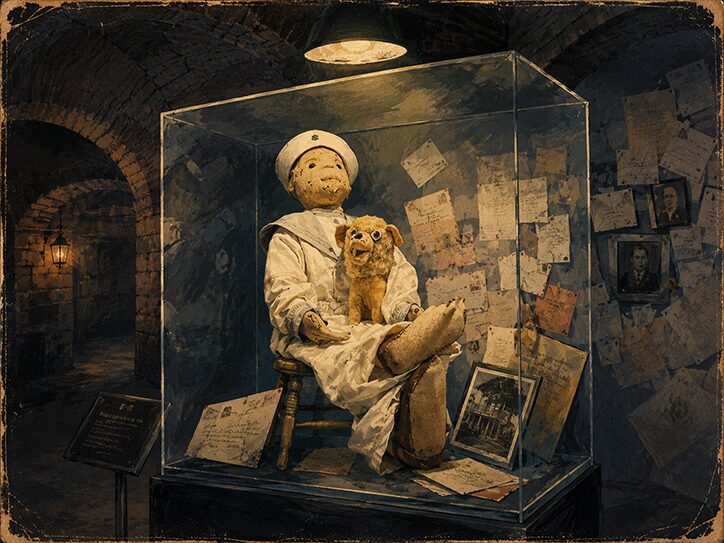
Robert is a stuffed cloth doll, approximately 40 inches tall, manufactured by the Steiff Company in Germany around 1904. Steiff is the same German toy company that invented the teddy bear, and at the time, their stuffed figures were considered some of the finest in the world. They weren’t toys for the average kid. They were heirlooms.
He has a painted face that’s worn smooth in places, button-like eyes, and is dressed in what was originally a child’s sailor suit, the kind that was fashionable in the early 1900s. He clutches a small stuffed dog that he’s reportedly been holding for over a hundred years.
He currently lives at the Fort East Martello Museum in Key West, Florida, where he has resided behind a custom-built display case since 1994.
And according to the staff there, the people who visit him, and the apology letters that arrive in the mail every week, he’s not entirely just a doll.
The Origin Story: How Robert Came to Gene Otto
The most widely told version of Robert’s origin goes like this:
In 1904, a young boy named Robert Eugene Otto, known to his family as Gene, was given a doll by a servant who worked in the Otto household. Gene was about four years old at the time. The Otto family lived in a Victorian house at 534 Eaton Street in Key West, a home that locals still call “The Artist House.”
The servant, according to legend, was either Bahamian or Haitian, and was said to practice voodoo. The story goes that she had been mistreated by Gene’s mother and gave the doll to the boy either as a gift, a parting gesture, or (depending on which version you believe) a curse.
It’s important to flag something here: this part of the story is murky. The “vengeful voodoo-practicing servant” origin tale has been repeated for decades, but historians and Otto family descendants have pushed back on parts of it. Some accounts suggest the doll was actually purchased by Gene’s grandfather during a trip to Germany and given to Gene as a normal childhood gift. The “cursed by a servant” version may have been added later as the legend grew.
Either way, what’s not disputed is what happened next. Gene named the doll “Robert” after himself, going by Gene to free up the name, and the two became inseparable.
The Hauntings Begin: Childhood Incidents at the Otto House
According to the Otto family, strange things started happening in the house almost as soon as Robert arrived.
Gene’s parents reported hearing him having long conversations with the doll in his upstairs bedroom, which would have been normal, except they could also reportedly hear a second voice answering back. A deeper voice. Not Gene’s.
Servants reported hearing the doll giggle on its own. Family members claimed to see Robert moving from room to room when no one was carrying him. Gene’s parents would sometimes wake at night to find Gene terrified in his bed, claiming “Robert did it,” with it being broken household items, overturned furniture, or messes that had no logical source.
Neighbors walking past the Eaton Street house allegedly saw Robert move from window to window on his own.
When confronted by his parents about whatever damage Robert was being blamed for, Gene reportedly always gave the same answer: “Robert did it.”
That phrase, by the way, has become almost the official catchphrase associated with the doll. You’ll see it on T-shirts in Key West gift shops.
Adult Gene Otto and the Doll
Most kids outgrow their stuffed companions. Gene Otto didn’t.
He grew up to be a successful painter and married a woman named Annette Parker in 1930. When Gene’s parents died and he inherited the Eaton Street house, he moved back in with Annette, and brought Robert with him.
According to people who visited the house during this period, Gene’s attachment to the doll bordered on the obsessive. He gave Robert his own room in the turret of the house. He insisted Robert have a seat at the dinner table. Annette reportedly disliked the doll intensely and may have eventually insisted it be moved to the attic.
After Gene’s death in 1974, the Eaton Street house and everything inside it, including Robert, was eventually sold.
The New Owners: When the Hauntings Got Worse
The family that bought the Eaton Street house in the mid-1970s included a young daughter. According to her account, Robert was the first thing she noticed when she explored her new home. Almost immediately, she began begging her parents to get rid of him.
She reported that the doll would move on his own, would change positions in his chair, would laugh at night. Decades later, as an adult, she was still telling interviewers that Robert had tried to kill her.
The new owners eventually donated Robert to the Fort East Martello Museum, which is operated by the Key West Art and Historical Society. He’s been there ever since.
The Curse: Why You Always Ask Permission
Here’s where Robert’s reputation really took hold.
Visitors to the museum quickly noticed that something seemed… different about this exhibit. People reported sudden temperature drops near the case. Cameras would inexplicably fail, a phenomenon that’s reported around many active paranormal sites, and one of the reasons we always bring backup gear on investigations. Visitors felt nauseous, dizzy, or anxious in his presence. Some claimed they saw Robert’s expression change while they looked at him.
But the more enduring part of the legend is what happens after people leave.
The tradition, established early in his time at the museum, is that visitors must ask Robert’s permission before photographing him. You stand in front of the case, you address him directly and respectfully, and you ask: “Robert, may I take your picture?”
If you feel a positive response (some people describe a sense of welcome; others say his head appears to tilt slightly), you may take the photo. If you don’t get a positive feeling, you walk away without taking one.
Visitors who skip this step (who mock the doll, who take photos without asking, who joke about him being “just a doll”) are said to suffer a remarkable string of bad luck after leaving Key West.
The museum displays a wall of letters from people who claim to have been cursed. The letters describe car accidents on the drive home, divorces, job losses, sudden illnesses, broken limbs. All of them include some version of the same plea: “I’m so sorry, Robert. Please lift the curse.”
The museum staff doesn’t open or read most of these letters publicly anymore. There are thousands of them. They keep arriving.
Is Robert the Doll Real? A Skeptic’s Take
Let’s be honest about what we know and don’t know.
What’s documented:
- Robert is a real doll with a verifiable history dating to the early 1900s
- He belonged to a real family (the Ottos) in Key West
- He’s been at the Fort East Martello Museum since 1994
- The museum genuinely receives apology letters by the hundreds
What’s harder to verify:
- The “voodoo servant” origin story has multiple competing versions and may be partially or entirely invented
- Many of the childhood “hauntings” were reported by Gene himself, often as an explanation for things he’d done
- The post-visit “curses” are almost entirely self-reported and rely on confirmation bias. Bad things happen to everyone, but if you visited a haunted doll three days before your car breaks down, you remember the doll
- No one has ever documented Robert moving, speaking, or doing anything paranormal in a controlled setting
Here’s the thing though: even if every supernatural element of Robert’s story is fabricated, the cultural phenomenon around him is absolutely real. The letters are real. The visitor experiences are real. The fear people feel when standing in front of his case is real. Whether that fear comes from something genuinely paranormal or from a century of accumulated legend doesn’t really matter when you’re the one standing there.
That’s what makes him worth understanding either way.
How to Visit Robert the Doll
If a trip to see Robert is on your radar, here’s what you’ll want to know.
Location: Fort East Martello Museum, 3501 South Roosevelt Boulevard, Key West, FL 33040
Hours: Generally open daily, typically 10 AM to 5 PM. Hours can change seasonally and around holidays, so check the official Key West Art and Historical Society website before you go.
Admission: Modest entry fee, usually under $10 for adults. Discounts for seniors, children, and locals. The museum is part of the broader Key West Art and Historical Society system, so admission includes other historical exhibits as well.
Best time to visit: The museum is busiest during Key West’s peak season (December through April) and around Halloween. If you want a quieter visit, go on a weekday morning in summer or early fall.
What to expect: Robert is displayed in a custom glass case in his own room within the museum. The exhibit includes information about his history, photos of the Otto family, and the wall of apology letters. You can stand in front of him for as long as you’d like.
The rules:
- Ask permission before taking a photo. Out loud. Address him by name
- Don’t mock him, even jokingly
- Don’t tap on the glass
- If you feel like you shouldn’t take the photo, don’t
- If you do take a photo and then start having a bad week, write the apology letter. It can’t hurt
Other paranormal stops nearby: Key West is full of paranormal history. The Hard Rock Cafe (formerly the Curry Mansion) is reportedly haunted. Captain Tony’s Saloon has its own ghost stories. The Audubon House and the East Martello Museum’s other exhibits are worth time. Many visitors pair a Robert visit with a ghost tour of Old Town Key West. If you’re building a list of haunted hotels and overnight stays to work into a trip, Key West has several options that pair naturally with a museum stop.
Pop Culture Legacy: The Chucky Connection
The most famous direct connection to Robert the Doll in pop culture is the Child’s Play film franchise. Don Mancini, the writer who created the character of Chucky, has confirmed in multiple interviews that Robert was an inspiration for the killer doll concept.
The connection isn’t a direct adaptation. Chucky has a completely different origin story involving voodoo and a serial killer. But the basic premise of “a doll that’s far more sinister than it appears” almost certainly traces back to Robert.
Robert also has his own film series, called simply Robert (and its sequels), produced by British horror studio Amicus Entertainment. These films take significant creative liberties with the real story and lean hard into traditional horror tropes, but they’ve introduced Robert to a new generation of paranormal fans.
He’s appeared on virtually every major paranormal investigation show, including Ghost Adventures, and has been featured in books, podcasts, documentaries, and countless YouTube deep-dives.
For an object that doesn’t technically do anything, Robert has had an outsized cultural footprint.
Frequently Asked Questions
Is Robert the Doll really haunted?
That depends on what you mean by “haunted.” There’s no scientific evidence that Robert has any paranormal properties. But the cumulative weight of a century of reports, the documented “curses” experienced by visitors, and the sheer volume of apology letters the museum receives are real phenomena worth taking seriously, whatever you believe is behind them.
Where is Robert the Doll located?
He resides at the Fort East Martello Museum at 3501 South Roosevelt Boulevard in Key West, Florida. He has lived there since 1994.
How old is Robert the Doll?
Robert was manufactured by the Steiff Company in Germany around 1904, making him over 120 years old.
Can you take Robert the Doll’s picture?
Yes, but only after asking his permission out loud. Visitors who photograph him without permission are said to receive a curse. The museum displays hundreds of apology letters from people who skipped this step.
Who made Robert the Doll?
He was manufactured by the Steiff Company in Germany, the same company that invented the modern teddy bear.
Did Robert really inspire Chucky?
Yes. Don Mancini, the creator of Child’s Play and the Chucky character, has cited Robert as an inspiration. Chucky isn’t a direct adaptation, but the underlying concept of a sinister childhood doll comes from Robert’s legend.
Can you stay at the Robert the Doll house?
Yes. The Artist House at 534 Eaton Street, where Gene Otto and Robert lived for decades, is now operated as a bed and breakfast. Some guests report unusual experiences there, particularly in the turret room that was once Robert’s.
Is there a curse on Robert the Doll?
Many visitors believe so. The museum has documented hundreds of self-reported cases of bad luck, accidents, illness, and misfortune among people who disrespected the doll or photographed him without permission.
The Bottom Line
Robert the Doll has outlived everyone who knew him personally. He’s outlived his original family, his second family, and several generations of museum staff. The Steiff Company that made him still exists, but the world that produced him is long gone. Victorian Key West, sailor-suited toddlers, hand-stitched German cloth dolls as childhood companions.
He’ll probably outlive us, too.
Whether that’s because of an actual paranormal presence, the power of suggestion, or just the simple weight of a century of accumulated stories, Robert is one of the most fascinating paranormal artifacts in the United States. He’s worth understanding. He’s worth treating with respect. And if you ever stand in front of his case, ask permission.
If you’ve already visited Robert, we’d love to hear about your experience. Send us your story through our contact page. We read every message and we’re always looking to add firsthand accounts to our paranormal experiences archive.
For more research into the most haunted objects, locations, and unexplained cases worth knowing about, subscribe to the newsletter. No fluff. No dramatization. Just the stories, and the facts behind them.
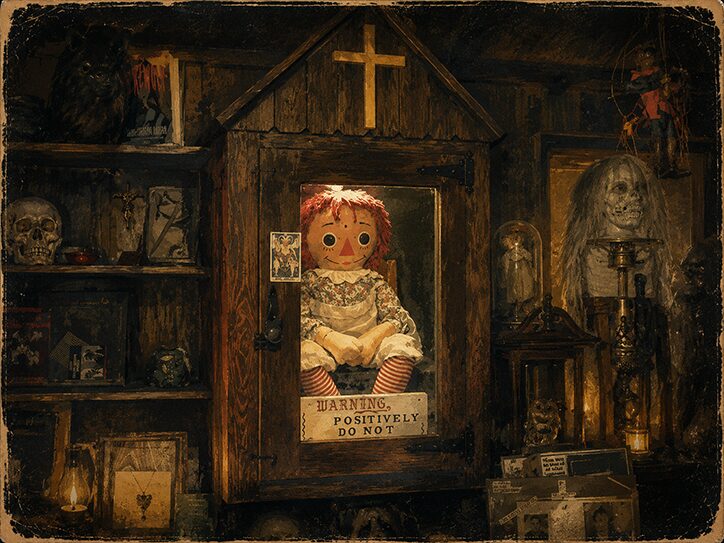
If Robert’s story pulled you in, you’ll want to read about his better-known and more controversial cousin, the real Annabelle Doll. Robert and Annabelle are the two most famous haunted dolls in America, and the overlap between their stories is worth understanding.
Just remember: don’t mock the doll.