At about 12:30 in the morning on June 22, 2017, one of the boys looked up at the kitchen window of our suite and went quiet. Written on the glass were the words HELP ME. They were on the outside of the window. We were on the third floor of the Jerome Grand Hotel, on the side of a mountain, with nothing on the other side of that glass but a drop to the Verde Valley.
That night in the Grand Suite is the reason Stay Spooked exists. It’s also why Jerome, Arizona will always be the town we measure every other haunted place against. Jerome has more ghost stories per square block than anywhere we’ve been, and it comes by them honestly: a copper boom, a hospital where thousands were treated, fires, brothels, a mine that shook the ground hard enough to make buildings slide downhill, and a town that emptied out almost overnight.
These are the Jerome ghost stories worth knowing before you go, and we’ve done what we always try to do: separate what’s on the historical record from what’s legend. Some of the most repeated “facts” about Jerome turn out to be neither. A few of the real ones are stranger than the stories.
Why Jerome Is Called a Ghost City
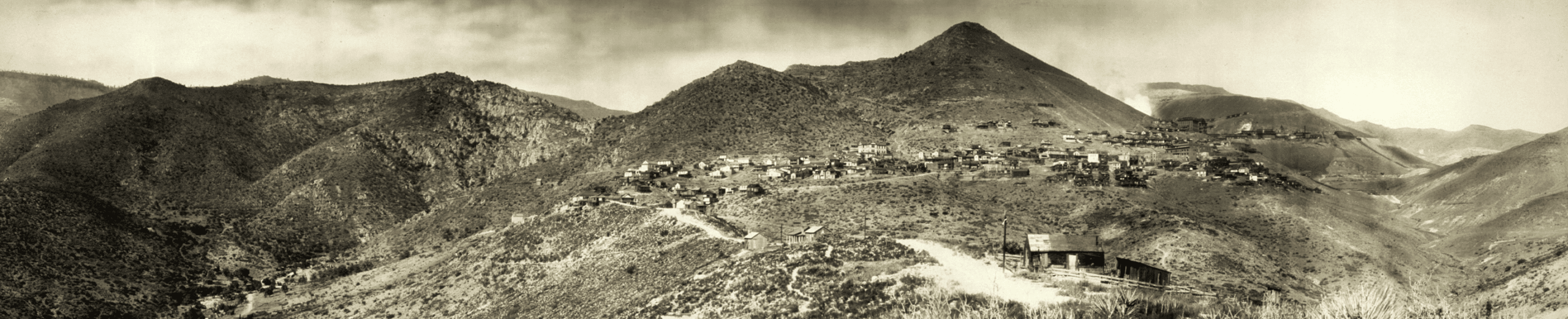
Jerome sits at more than 5,000 feet on Cleopatra Hill, stacked up the mountainside above the Verde Valley. It was built on copper. The United Verde mine and later the UVX (the Douglas family’s “Little Daisy” operation) made it one of the richest mining camps in the West, and the town grew fast and rough. Wooden Jerome burned again and again in the 1890s, badly enough that the town incorporated in 1899 largely to get a building code and a fire department. In 1903, a New York newspaper called it “the wickedest town in the West.”
How big Jerome got depends on who you ask. Local accounts put the peak at 10,000 to 15,000 people, a number you’ll see on plaques and in brochures. The federal census never counted more than about 4,900 inside town limits, in 1930. The bigger figures likely include the miners, families, and transient workers spread across the whole district. Either way, Jerome was one of the largest towns in Arizona in its day.
Then it all stopped. The UVX closed in 1938. The company hospital closed in 1950. Phelps Dodge shut down the United Verde, the “Big Mine,” in 1953, and Jerome’s population fell to a couple of hundred people almost immediately. That same year, the residents who stayed formed the Jerome Historical Society and started promoting their nearly empty town as “America’s Largest Ghost City.” It was a marketing line, and it worked. Artists, hippies, and tourists followed. Jerome became a National Historic Landmark district in 1967, and today around 460 people live there full time.
That’s the backdrop for every story below. Jerome isn’t a ghost town in the abandoned-ruins sense. It’s a living town built inside the shell of a much bigger one, and a lot of the old shell is still standing.
The Jerome Ghost Stories, Fact-Checked
1. The Hospital on the Hill (Jerome Grand Hotel)

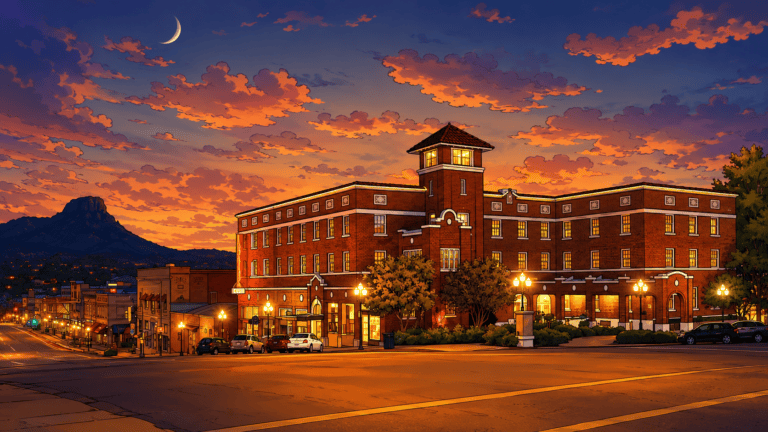
Every Jerome ghost story eventually points uphill to the five-story building looming over town. It opened in January 1927 as the United Verde Hospital, a poured-concrete, fireproof replacement for an earlier company hospital that blasting and shifting ground had damaged. By 1930 it was being called the most modern hospital in Arizona. Phelps Dodge kept it running after buying the United Verde in 1935, then closed it in 1950 and moved medical care down to Cottonwood.
The building sat largely empty for more than four decades. A caretaker looked after it for years, and the hotel’s own history notes that the last caretaker died there in the 1980s. In 1994 the Altherr family took it over, and the first hotel rooms opened in July 1996. It’s been the Jerome Grand Hotel ever since, with the original 1926 Otis elevator still running.
The legend: you’ll read everywhere, including in an earlier version of our own Arizona roundup, that about 9,000 people died in the hospital. We went looking for the source, and there isn’t one. The hotel doesn’t make that claim, and no records support a specific number. The figure appears to come from a piece of folklore that the hospital “averaged a death a day” over its 23 years. A busy hospital serving a mining district for more than two decades certainly saw a great many deaths. The exact number is legend.
The building’s most famous story is Claude Harvey, a maintenance man who, according to local lore, was found dead beneath the elevator in 1935. The death was ruled an accident, but rumors of foul play never went away, and he’s the figure most often blamed for the elevator moving on its own and for a shadow seen in the basement. We couldn’t find an inquest record or contemporary newspaper account to confirm the details, so treat it as the hotel’s signature legend rather than settled history.
The other reports are exactly what you’d expect from a former hospital: a nurse or “lady in white” on the balconies, a small boy on the third floor, children’s footsteps in empty halls, coughing and labored breathing from vacant rooms, and the sound of a gurney rolling down a hallway in the middle of the night. Room 32 has the reputation for being the most active. We can’t verify any of it for you. We can tell you that one of us heard that gurney.
2. Jennie Bauters, the Madam Who Built Main Street
Jennie Bauters, a Belgian-born madam, was one of the most successful businesspeople in early Jerome. Starting in 1896 she built “Jennie’s Place,” officially listed as a boardinghouse, and when fires burned her out she rebuilt, more than once. Her 1898 masonry building, the third on the site, still stands on Main Street.
Here’s the part most ghost tours get wrong: Jennie wasn’t murdered in Jerome. She left town in 1903 and moved to Goldroad, a mining camp near Oatman. On September 3, 1905, a gambler named Clement C. Leigh, who claimed to be her husband, shot her when she refused him money. Leigh was convicted of first-degree murder in Kingman and hanged in the Kingman jail yard in January 1907.
That hasn’t stopped Jerome from claiming her ghost. The building at 309 Main Street, long known as the Mile High Grill & Inn and now The Clinkscale, is where her story gets told most: a woman’s apparition, kitchen utensils flying, radios switching on, and a phantom cat that leaves paw prints on the beds. Whether the Clinkscale building was ever part of Jennie’s business is disputed, and her documented brothel was a separate building. But if any ghost in Jerome has earned the right to come home, it’s the woman who rebuilt half of Main Street.
3. Headless Charlie, the Miner Who Lost His Head
Ask around town about the Headless Miner and you’ll hear about Charlie, a miner decapitated in an underground accident. His head was found, the story goes, but his body never was, and he’s been looking for it in the old tunnels under Jerome ever since. People report a headless figure, heavy footsteps, and oversized boot prints underground.
We found no record of a miner named Charlie dying that way in Jerome, and headless-miner tales show up in mining towns all over the West. What is real is the danger. Fatal accidents were routine in the United Verde, like the 1905 death of a miner who fell 500 feet down the main shaft. Headless Charlie is folklore, but he stands in for a lot of men who didn’t come home.
4. The Sliding Jail

This one isn’t a ghost story at all, and it’s the strangest thing in Jerome. The town’s concrete jail was built in 1905 between Main Street and Hull Avenue. Starting in the 1930s, blasting from the mines, fault movement, and erosion set parts of Jerome literally sliding down the mountain, at times more than a foot a month. The jail went with it, traveling about 225 feet downhill until it ended up in the middle of Hull Avenue, where it was eventually pushed to the spot it sits today.
The Jerome Historical Society took ownership in 2017 and stabilized it. You can walk right up to it on Hull Avenue next to the basketball court. Standing in a jail that walked out of its own foundation is about as Jerome as it gets.
5. Spook Hall
Yes, Jerome’s community hall is really called Spook Hall. Officially it’s Lawrence Memorial Hall at 260 Hull Avenue, built in 1917 as a garage and later home to a J.C. Penney store. You’ll hear that it’s named for a ghost, usually a woman stabbed on the site who appears out front and walks off toward the hotels.
The real origin is better. After the mine closed, Historical Society members joked that they were the “spooks” haunting a near-empty ghost city. In 1953 they started an annual Spooks Homecoming, potluck, and dance, and once it moved into the Lawrence building, the name stuck. Spook Hall still hosts the Historical Society’s annual Ghost Walk every October, along with concerts, shows, and town gatherings. It’s a building named after the living people who refused to let Jerome die.
6. The Haunted Hamburger and the Vanishing Hammers
The Haunted Hamburger at 410 Clark Street sits in the old Jerome Palace building, and its story starts with renovation. The crew restoring the building kept losing tools, especially hammers, which would vanish and turn up somewhere else. A previous owner reportedly warned them that “the ghosts like hammers.” Doors slam, and the suite upstairs has its own reputation for objects that won’t stay put.
We have our own small entry for this one. On a day trip to Jerome in March 2017, a few months before our Grand Suite night, Liz got stuck in the restroom here. The door wouldn’t open for several long seconds, for no reason anyone could find. It’s minor, and it’s exactly the kind of thing a building with a ghost-themed name invites. It also freaked her out enough that we still bring it up every time we drive past.
7. The Connor Hotel and the Spirit Room
David Connor built the Connor Hotel on Main Street in 1898 after an earlier fire, lost it to fire in 1899, and reopened it that August. The hotel closed in the early 1930s, but the bar downstairs, the Spirit Room, kept pouring. Today the hotel is open again above the bar, and its guest rooms carry the stories: whispering and women’s laughter in Room 1, armoire doors that open on their own, and a growling dog and an old man’s cough reported in Room 4. These come from guest and staff accounts rather than any historical record. They also come from people who had absolutely no reason to want to leave a room they’d paid for.
8. The Ghost City Inn
Built around 1890 as a boarding house for mine managers, the Ghost City Inn on Main Street is now a bed and breakfast with one of the best porch views in town. The inn itself doesn’t trade on ghosts, but guests have reported a woman in one of the upstairs rooms, a man standing in the hall, and doors closing on their own. It’s a good choice if you want the atmosphere without committing to a former hospital for the night.
9. The Douglas Mansion
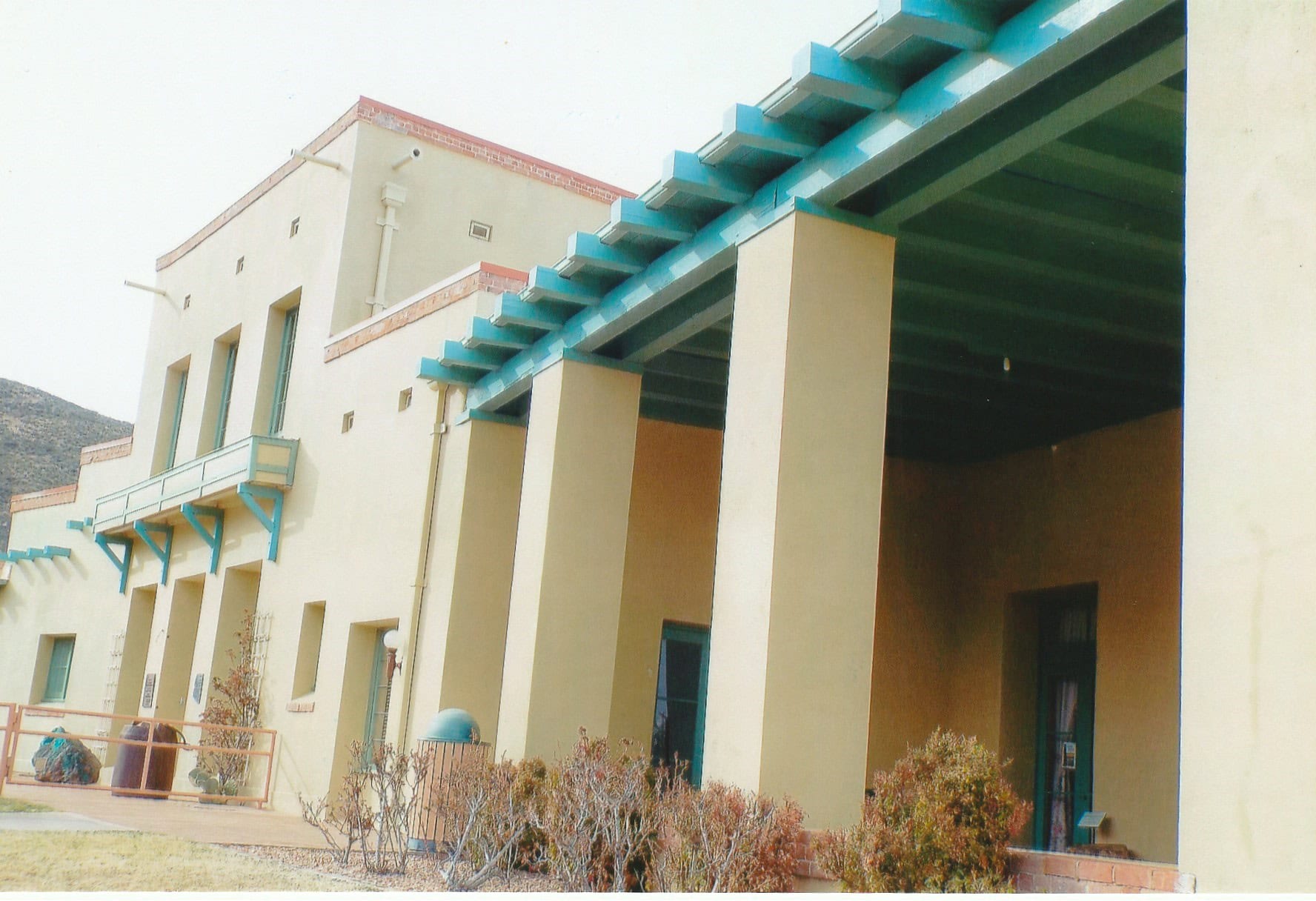
James “Rawhide Jimmy” Douglas built his adobe mansion in 1916 above his Little Daisy mine, and it’s now the museum at Jerome State Historic Park. The documented ghost lore here is thin, mostly secondhand reports of cold spots and voices. But the park leans into its “dark history” every October with its Flashfright tours, and the museum is the single best place to understand how Jerome actually worked. It’s open daily from 9 to 4:30, and admission is $10 for adults and $5 for kids 7 to 13.
10. The Hogback Cemetery
Jerome’s old cemetery sits on Hogback Ridge, neglected and overgrown, with 386 documented burials through 1917 and many more unmarked. Dozens of death certificates simply note “buried by father,” most of them from Mexican families who buried their own. When the 1918 flu hit, the newer Jerome Valley Cemetery took in as many as 51 burials in a single month. You’ll hear about dark figures and footsteps up here. We’d ask you to visit it the way you’d want your own family’s graves visited: quietly, in daylight, and without moving anything.
Our Night in the Grand Suite

We’ve written about the legends. Here’s the part we can actually vouch for. On June 22, 2017, seven of us checked into the Grand Suite on the third floor of the Jerome Grand Hotel: Liz and me, our older boys Jack and Ben, my sister Stacy, and her two sons. Reid wasn’t born yet. We had borrowed ghost-hunting gear and no idea what we were doing.
The Grand Suite is built into the old surgical floor. You walk in through a set of swinging wooden operating room doors, and the living room was once the operating room itself. From the moment we arrived, it had a feeling we’ve never quite found anywhere since: eerie, heavy, and incredibly active.
- I sat down in a chair in the main bedroom and the temperature dropped around me, with the very clear sense that something was there. When I stood up, the cold stayed in the chair.
- Around 12:30 AM, HELP ME appeared on the outside of the kitchen window, three stories above a sheer drop. Shortly after, I was standing in the kitchen eating chips when something knocked on that same window.
- Around 1:00 AM, the operating room doors refused to stay closed. We’d push them shut and they’d ease back open, as if someone on the other side were holding them. In the morning they behaved perfectly.
- At 3:00 AM, with all seven of us packed into one bedroom, Liz lay awake listening to a gurney rolling down the hallway outside the suite.
- By morning, two of the kids said they’d seen an old man walking in the hall, Liz had felt something like a cat walking across her feet, and the antique clocks in the suite had all stopped at different times.
We don’t claim any of that as proof. We do know what seven people experienced and wrote down the next morning, and we’ve been chasing that feeling ever since. Our full hour-by-hour field report from the Grand Suite is coming soon. If you’re thinking about booking it yourself, it’s the room we’d send you to, and you’ll want to bring a group.
Jerome at Halloween: What’s On in 2026
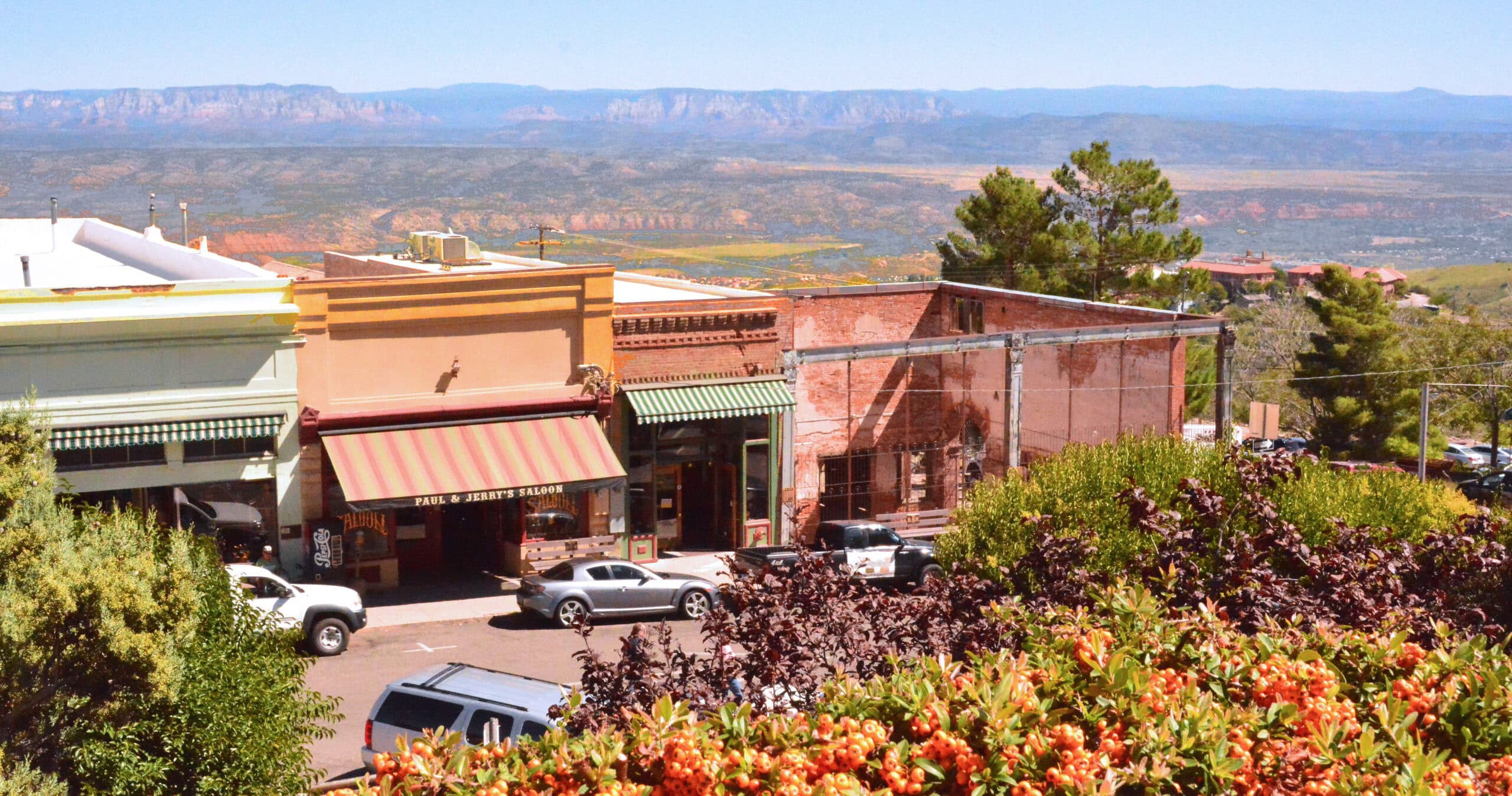
Jerome doesn’t need a holiday to feel haunted, but October is when the whole town leans in. Here’s what we’ve confirmed for this year, along with what to call about before you drive up.
- Flashfright Tours at the Douglas Mansion: Saturday, October 24, 6:30 to 8:30 PM (last entry 8:15). You tour the mansion in the dark by dim flashlight through staged scenes from Jerome’s darker history. $5 per person, and you must buy in advance through Arizona State Parks.
- Bat Walk at Jerome State Historic Park: Saturday, October 17. Registration required through the same Arizona State Parks events page.
- The 51st Annual Jerome Fire Department Auxiliary Halloween Dance: Saturday, October 31, doors at 7 PM, band from 8 PM to midnight. It’s the fire department’s biggest fundraiser of the year and a genuine Jerome institution. Recent years have been 21 and over and held outdoors at the basketball court by the Sliding Jail, but the 2026 venue and ticket price hadn’t been posted when we checked, so call the Jerome Fire Department at (928) 649-3034.
- Ghost tours: Jerome Ghost Tours runs a one-hour Jerome Ghost Walk (listed at $45) along with longer history and ghost tours, and Tours of Jerome runs a roughly two-hour haunted tour starting around dusk. Book ahead for October weekends, and check age limits if you’re bringing kids.
- The Jerome Grand Hotel: the hotel has offered guided ghost hunts for guests in the past, but nothing is listed on its site this year. Call (928) 634-8200 to ask, and book a room as early as you can. October weekends go fast.
The Historical Society’s annual Ghost Walk at Spook Hall already ran on October 2 and 3 this year. It’s an early-October tradition, so put it on your calendar for next fall.
Tips for a Haunted Weekend in Jerome
- Book the right room early. If you want the Jerome Grand Hotel, reserve now and request Room 32 or the Grand Suite by name. The Connor Hotel and The Clinkscale put you right on Main Street.
- Plan for the hill. Jerome’s streets are steep switchbacks and parking is tight on October weekends. Wear real shoes and expect to walk uphill.
- Dress for elevation. At over 5,000 feet, late October nights get cold, especially on an outdoor ghost tour.
- Go in daylight too. Jerome by day is an artist colony full of galleries and shops, and the Douglas Mansion museum gives you the history that makes the night tours land.
- Bring a notebook. The best record we have of our Grand Suite night is what the kids wrote the next morning. Here’s the gear we bring now, but a pen and paper still matter most.
A Skeptic’s Take
Jerome’s history doesn’t need embellishing, and a surprising amount of what gets repeated about it is embellished. Here’s how the big claims hold up.
Well documented: the hospital’s opening in 1927 and closing in 1950, the 1953 mine closure and near-abandonment, the fires of the 1890s, the Sliding Jail’s 225-foot journey, Jennie Bauters’ career in Jerome and her murder in Goldroad in 1905, and the town’s reinvention as “America’s Largest Ghost City.”
Legend or unverified: the 9,000 hospital deaths, the details of Claude Harvey’s death in the elevator, Headless Charlie, the ghost behind Spook Hall’s name, and the link between Jennie’s ghost and The Clinkscale. Local population claims of 15,000 are also generous next to the census.
None of that makes Jerome less haunted in the way that matters to us. It’s a town that was full of people and then wasn’t, and the buildings they left behind are still standing on the side of a mountain. Spend a night in one and decide for yourself.
Frequently Asked Questions
Is Jerome, Arizona really haunted?
Jerome is one of the most reported haunted towns in Arizona, with ghost stories attached to the Jerome Grand Hotel, the Connor Hotel, The Clinkscale, the Haunted Hamburger, and more. The history behind those stories, from mining deaths to a hospital that served the district for 23 years, is real. Whether the ghosts are is up to you. Our own night in the Grand Suite is the reason we started this site.
Did 9,000 people die at the Jerome Grand Hotel?
That number is legend. The United Verde Hospital, now the Jerome Grand Hotel, operated from 1927 to 1950 and certainly saw many deaths, but no records support the often-repeated figure of 9,000. It appears to come from folklore that the hospital averaged one death a day.
Who was Jennie Bauters?
Jennie Bauters was a Belgian-born madam who built and rebuilt one of Jerome’s most successful businesses in the late 1890s. She left Jerome in 1903 and was shot and killed in Goldroad, near Oatman, on September 3, 1905, by Clement C. Leigh, who was hanged for the murder in 1907. Her ghost is said to haunt The Clinkscale at 309 Main Street.
Why is Jerome called a ghost town?
After the United Verde mine closed in 1953, Jerome’s population collapsed to a couple of hundred people. The residents who stayed formed the Jerome Historical Society and promoted the town as “America’s Largest Ghost City,” which drew artists and tourists and saved its historic buildings. About 460 people live there today.
Can you see the Sliding Jail in Jerome?
Yes. The 1905 concrete jail slid about 225 feet downhill starting in the 1930s and now sits on Hull Avenue next to the basketball court. It’s free to see, and the Jerome Historical Society stabilized it after taking ownership in 2017.
What is there to do in Jerome for Halloween 2026?
Jerome State Historic Park runs Flashfright flashlight tours of the Douglas Mansion on October 24, the Jerome Fire Department Auxiliary holds its 51st annual Halloween Dance on October 31, and local operators run ghost walks throughout the month. The Jerome Grand Hotel books up early for October, so reserve ahead.
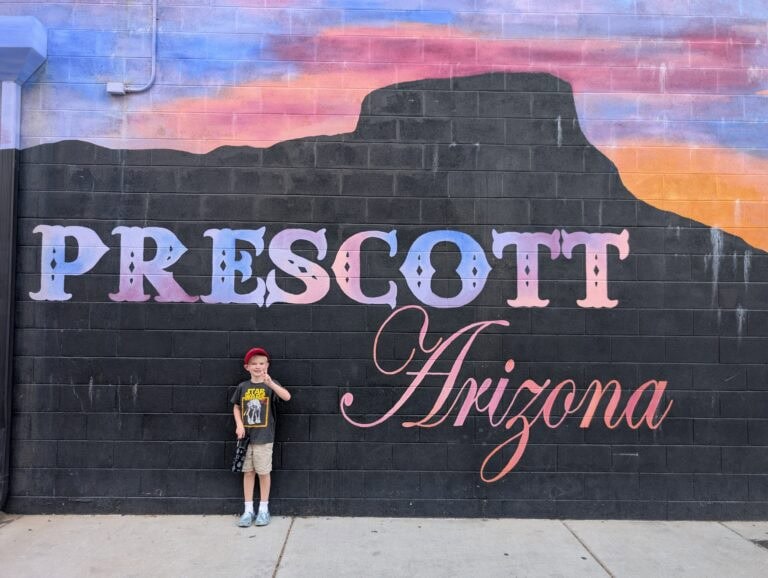
Jerome is where our story started, and it’s still the first place we tell people to go. If you’re building a bigger Halloween trip, pair it with Prescott, 45 minutes away, using our guide to the most haunted places in Prescott, and see our list of the most haunted hotels in Arizona you can book this Halloween. For more of the state’s lost towns, browse our ghost towns guide.
Stayed in Jerome yourself? We’d love to hear what happened. Send us your story through our contact page, and subscribe to the newsletter so you’re the first to read our full Grand Suite field report. No fluff. No dramatization. Just the stories, and what actually happened.